Ektar 100 is one of my favorite summer film stocks due to its high saturation when slightly overexposed, as well as relatively low iso (allowing shots to turn out okay, even in the blistering Colorado heat). Ektar is also a super common film stock, with few frills (ie. it isn’t a super experimental film stock that heavily impacts the final print like some other –more crazy– boutique film stocks). Because of the relatively easy-going, beautiful nature of Ektar, as well as its interesting reactivity to over-exposures, I spent a few afternoons attempting to take some more experimental shots on my OM-1 camera with a 50mm lens and polarizing filter. Most of these images were taken near Wall-street in Four Mile Canyon, though some were also taken off of Valmont in Boulder. All of these images are raw as well.
Color shifts
One of the first things I attempted, was slightly detaching the lens of the camera from the camera body, and then taking an image. I noticed that as soon as you unlock the lens from the body, the light meter will stop working properly, so meter your light first. The first shot I took was of a hill full of burned, dead trees. I took two identical shots, one with the lens attached correctly and one without.
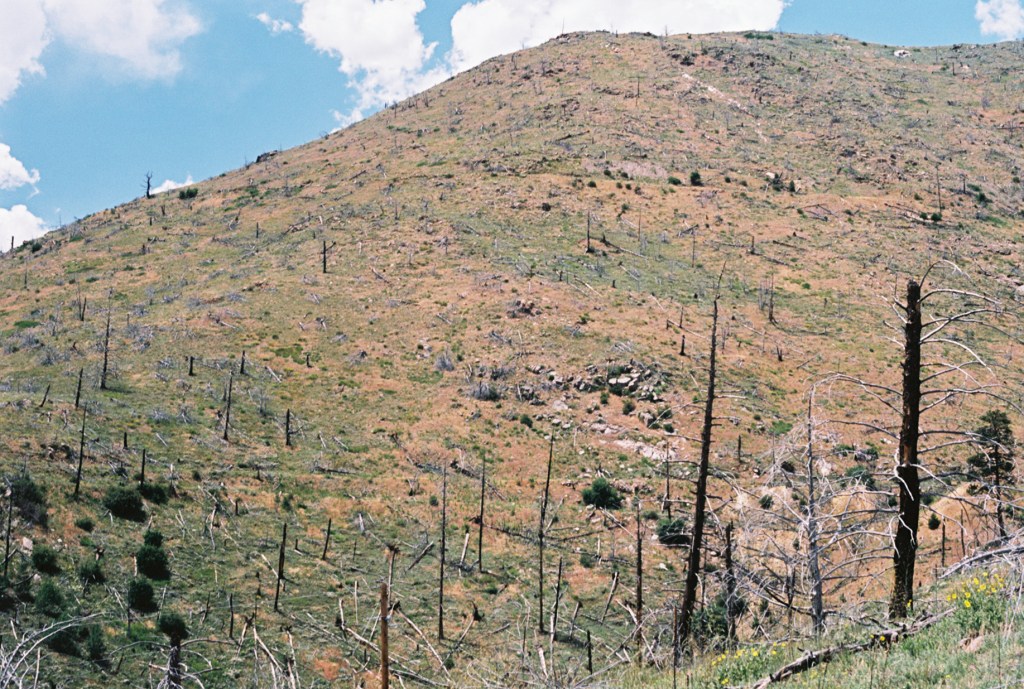

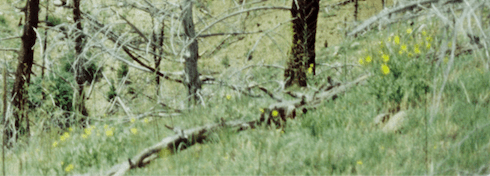
I was expecting there to be more artifacts from light leaks or degradation to the film altogether. I did not expect the film to color shift green. In addition to the major colorshift, the added distance between the body of the camera and the lens pulls the image slightly out of focus, producing a more ‘liquid’ effect. This is best seen in the bottom right of the print with the yellow flowers.

I took a similar pair of shots at a different hill featuring power lines (my favorite) and achieved very similar results.
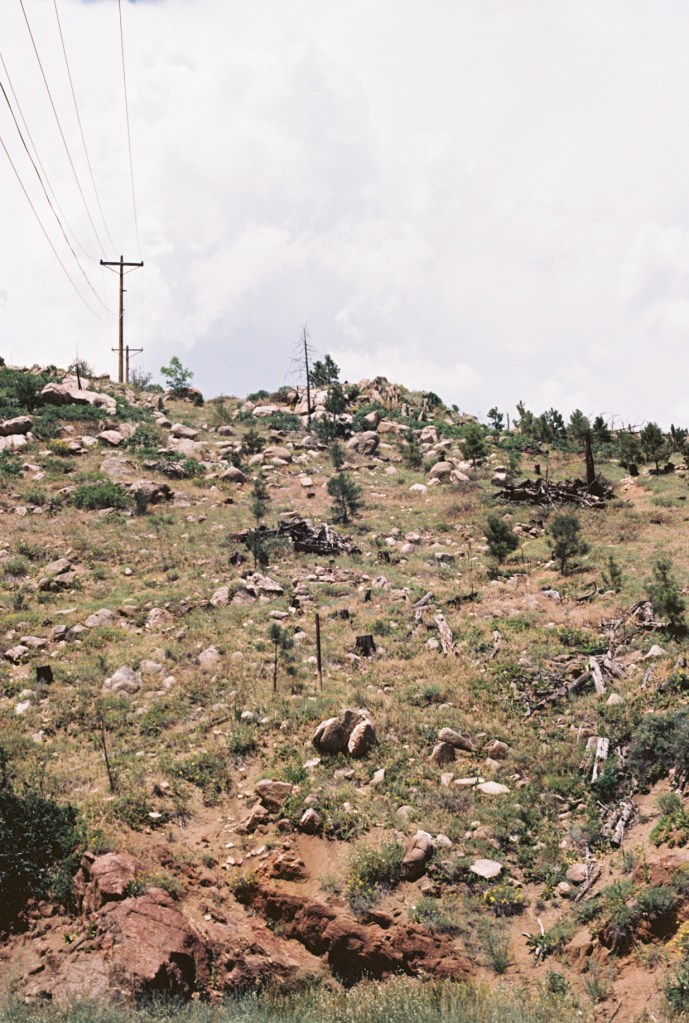

The light leaks producing the color shift also increases exposure, possibly up to 1-2 full stops. This can be seen in the fine details of the power lines and the blow out of cloud details on the right. In the future, I want to try this again but more artistically and on different film stocks.
Reflections
I wanted to particularly capture images from reflected light using this roll of film. I did my best to find reflection sources, but found the exercise to be extremely challenging. What I did find were several traffic mirrors, mirrors on old cars, and reflections in the rear window of my car.
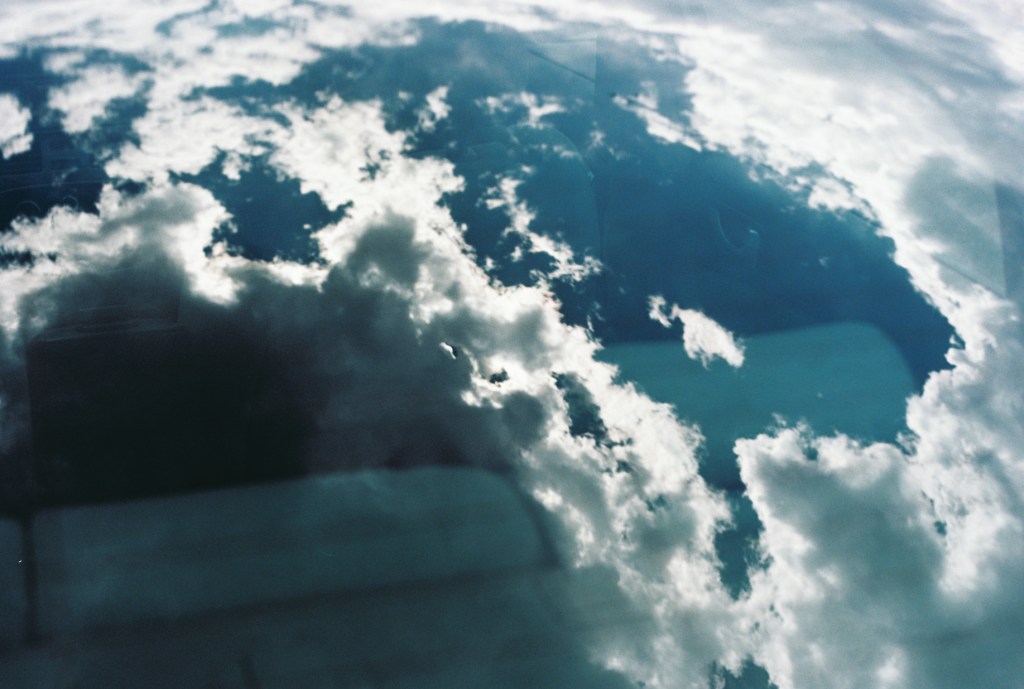
Using a polarizing filter, I photographed the sky reflected by my rear car window. I attempted to shoot with the lowest F-stop the light would allow in an attempt to blur out the inside of my car. Interestingly, I found that the focal point for some parts of the sky was pretty similar to some objects in my car, including the passenger seat and parts of the door handle. The image is interesting and feels a bit like a double exposure in that its hard for your eyes to find satisfying parts of the image to rest.
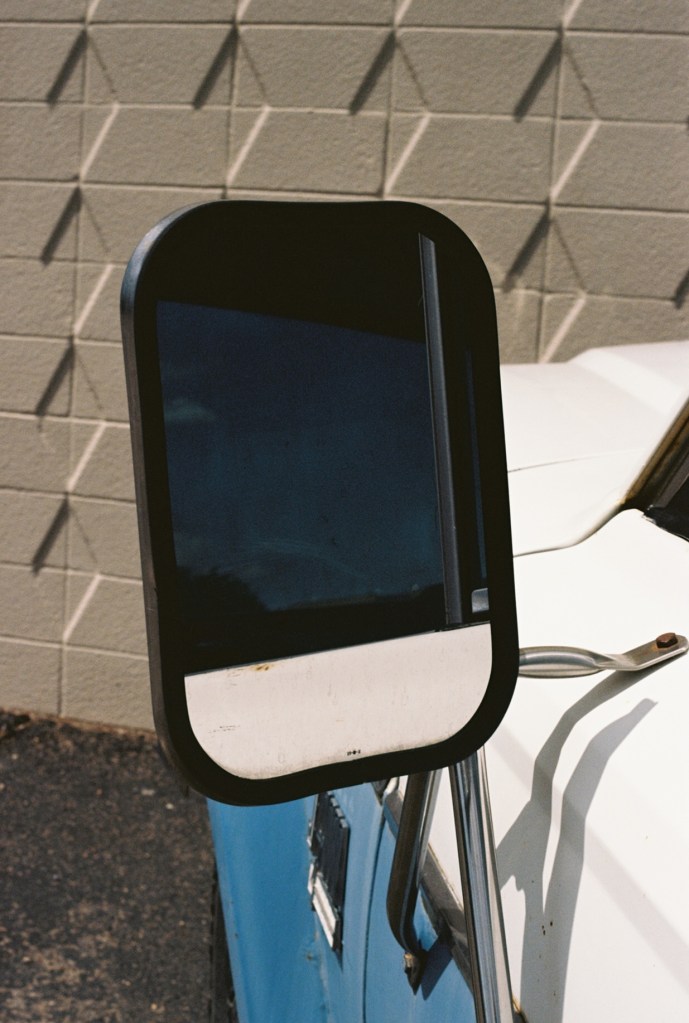
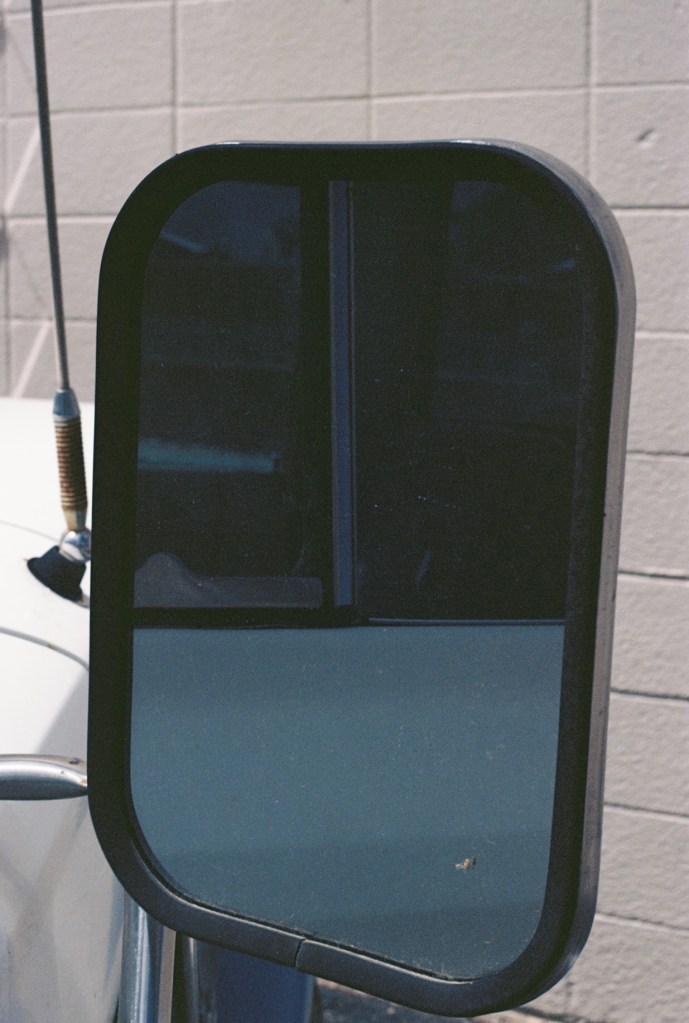
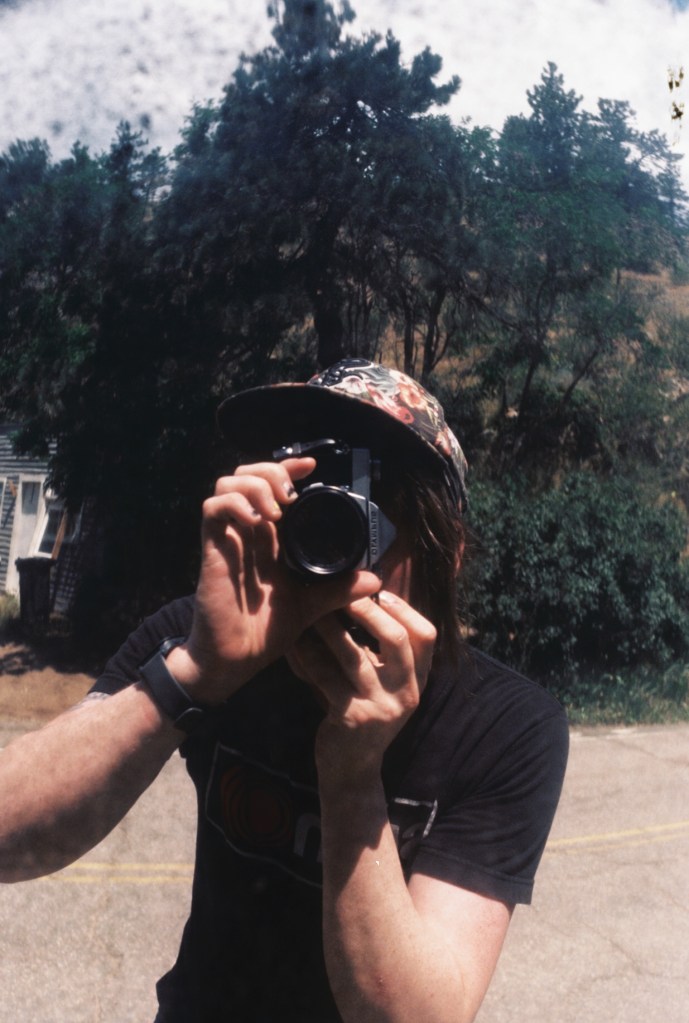
I attempted a shot using the mirror of an old truck to capture reflected light through the mirror, however, I found that the image in the mirror was far too underexposed in comparison to the rest of the image. Additionally, I wish that the mirror was framed better, as the tilted angle makes it hard to achieve any sense of harmony in the print. Of course, photographing the mirror dead-on would result in a print containing the image of your camera, but maybe there is a creative way to achieve this shot in a more harmonious way.

Other reflection sources I found included a curved mirror along the road, used for seeing oncoming traffic around the corner. The print feels simultaneously familiar and unfamiliar at the same time– almost like you are intoxicated or having a hard time keeping track of your surroundings. The mirror did produce a slightly blurry, slightly overexposed print compared to the image I saw in the viewfinder, but overall I enjoy the alien simplicity of the shot.
Saturation tests
While less overtly experimental, I wanted to better benchmark the strong saturation of overexposed Ektar 100. To achieve this, I tried to find strikingly saturated areas or objects I would not typically photograph. including the tail-light of a construction truck, old rusted metal, and graffiti.

The tail-light was an excellent shot, as the saturation is further emphasized by the mostly grayscale surroundings. The red gleams as a beacon of hope in an otherwise dark and dreary landscape. I can’t help but feel a little sad looking at this photograph.
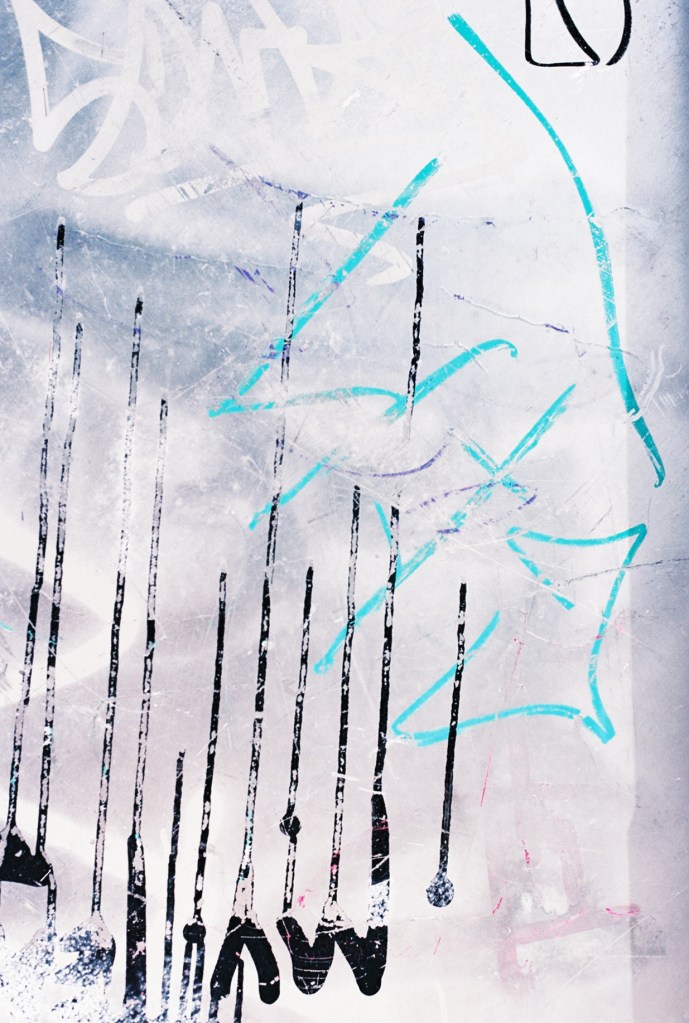
Other sources of saturation included graffiti on the back of signs, as well as on the sides of brick walls. I found the colors to pop, especially the lighter blue and red markers/paint (which makes sense because ektar is known for strong saturation in the greens and reds.
Interesting shots
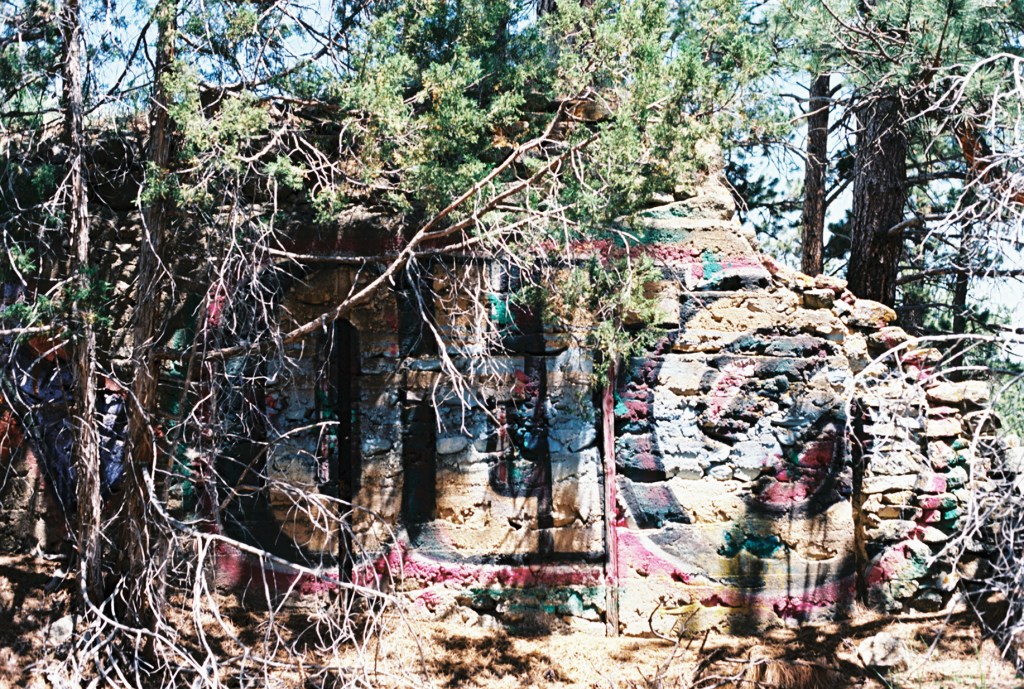
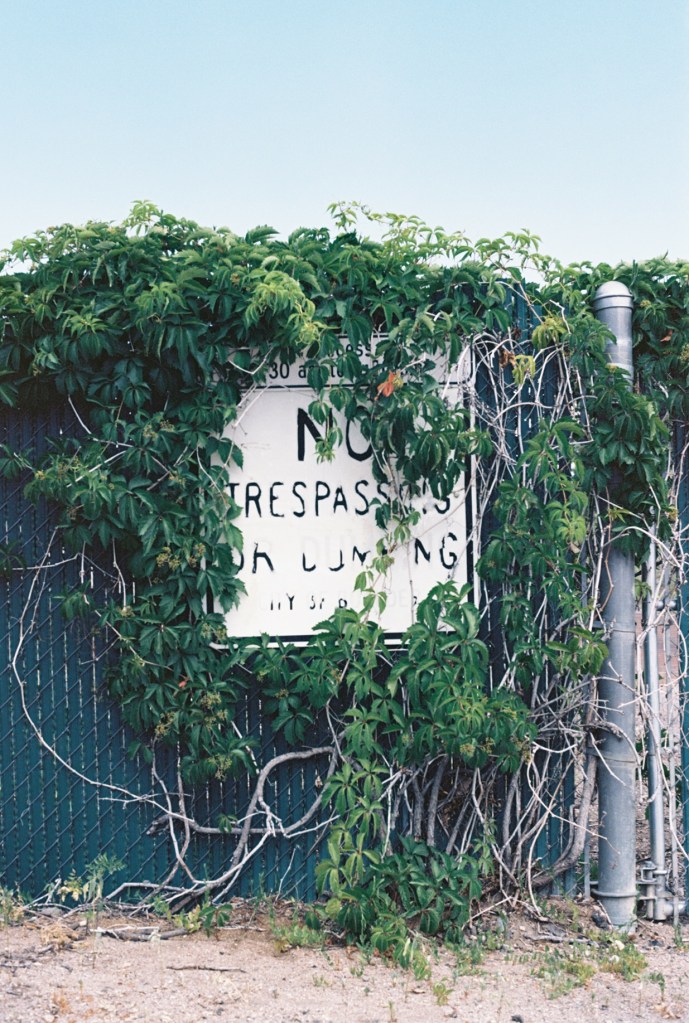
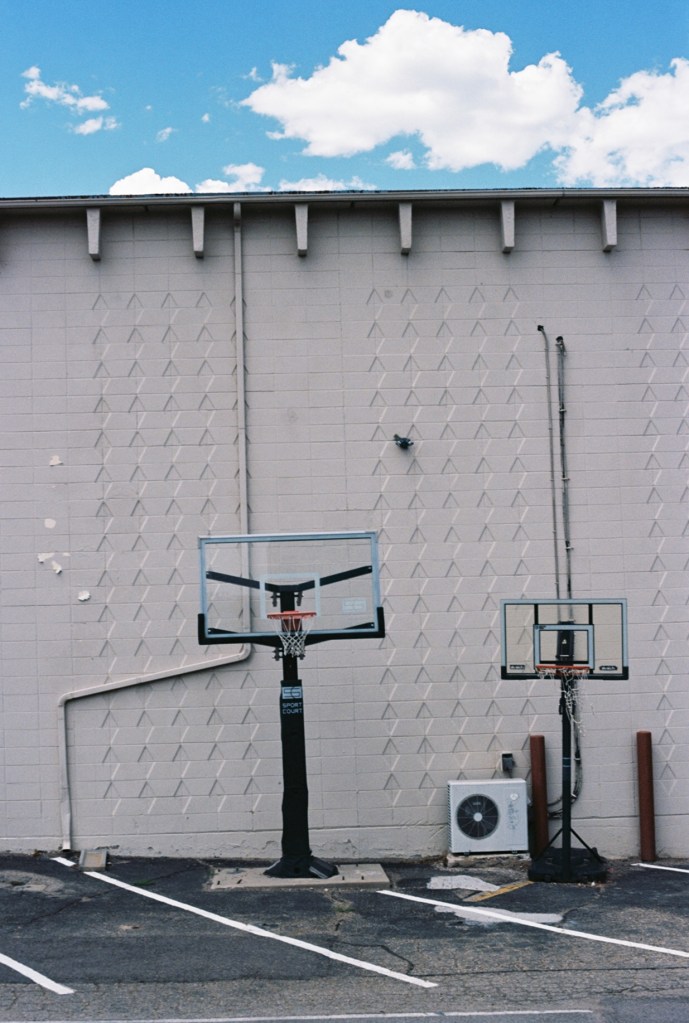
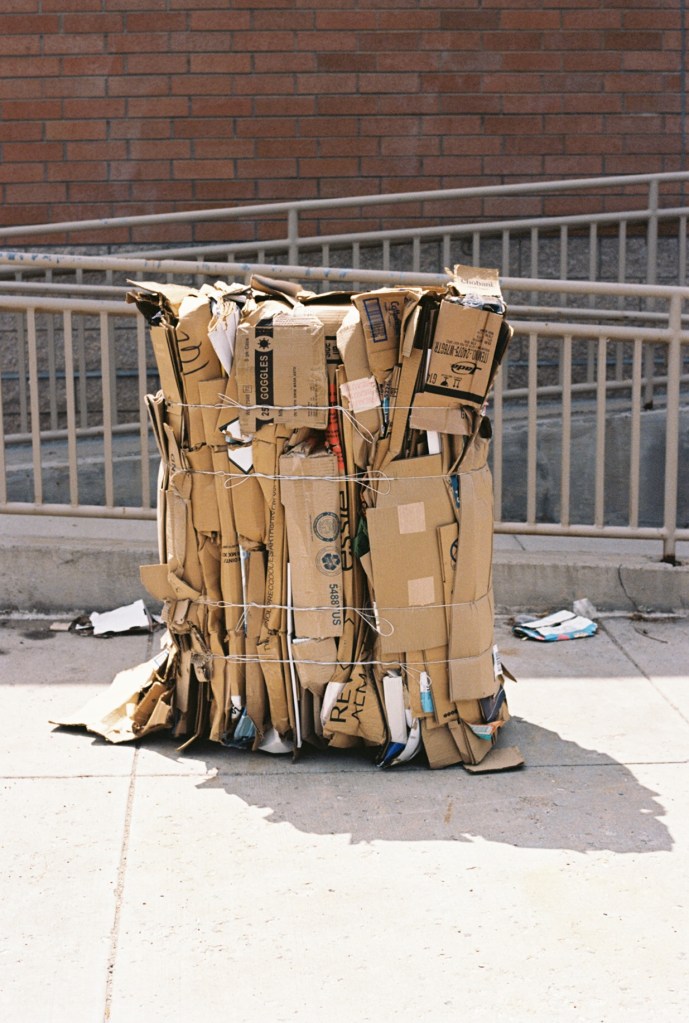
Of course, one cannot help but shoot when they encounter an interesting subject or event. The remaining shots are less experimental, but are interesting shots on the same roll of film. If anything, these shots can better benchmark what to expect when shooting on Ektar 100 normally. I find that in many of these shots, the sky becomes a pleasant light-sky blue, even when polarized. The clouds (if present) typically float on top of the blue sky, as if they were painted in.



Conclusion
Ektar 100 is a really interesting film stock, and great for experimenting with. Raw, it carries a light, playful nature to it. When pushed to its limits, however, it can be a really cool vehicle for exploring unconventional photography techniques. I hope to explore the film stock much more in the future, and continue to catalog interesting ways to creatively influence a print– regardless of the source material.
 Second Arrow